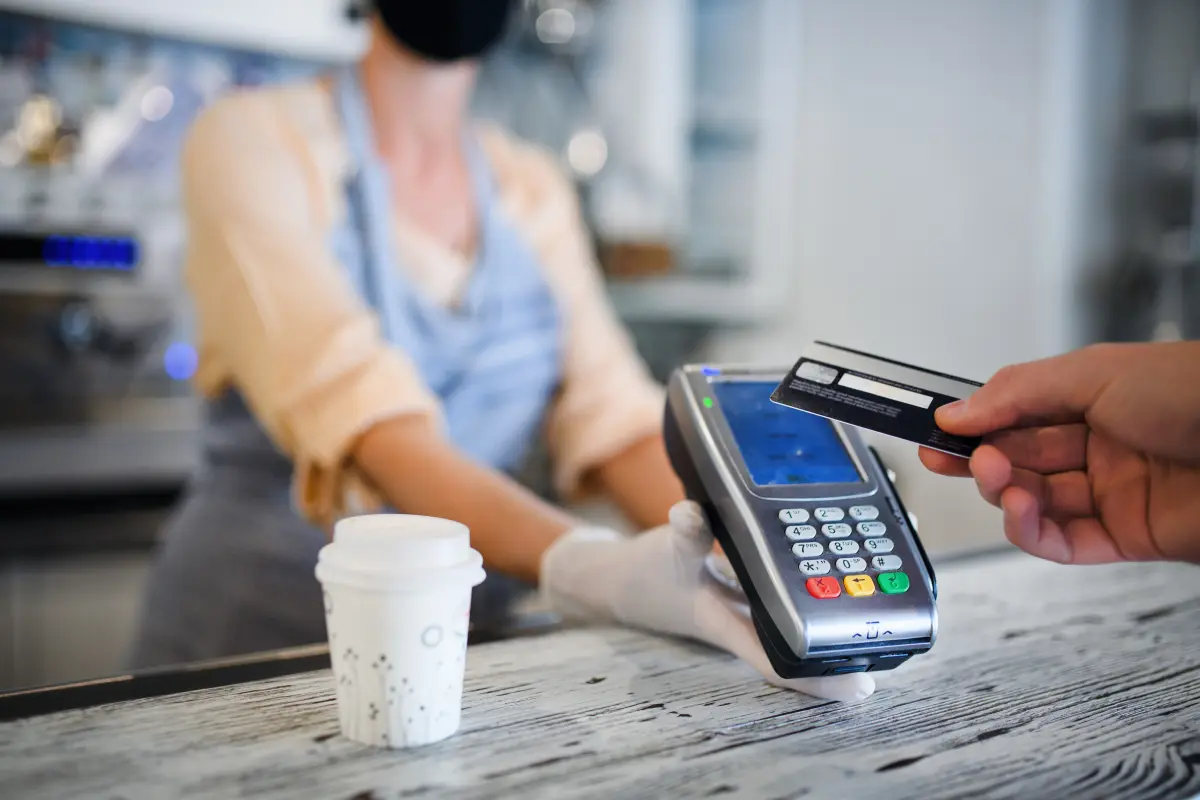
To take payments on your own website, you usually need a payment gateway. It accepts the customer's UPI, card or net banking payment and later pays that money into your bank account.
India has several well-known gateways, and at first look they are almost alike. After you start, you see the fee per order and the payout time are different. Refunds are not same, and sign-up paperwork also. Below is what we check, and you can use it for any gateway, even one not named here.
What a gateway does that a UPI QR code does not
Lot of small sellers start with a UPI QR code, or they share a UPI ID in the WhatsApp chat. It is free of cost and it works fine, till you get orders daily.
- Which payment is for which order. With a plain QR code you only see "₹1,240 received from R. Kumar". Then you have to find out which order that was. A gateway puts the order number next to the payment for you.
- Confirming the order. The moment a payment succeeds, the gateway informs your website. The order gets confirmed and the customer gets a receipt, and nobody has to keep checking a phone.
- Cards and net banking. Some customers still like to pay by card, mostly older people and buyers outside India.
- Refunds and records. Refunds also go back by the same route. And you get one statement of everything for your accountant.
Suppose you take ten orders a week through WhatsApp. For now a QR code may be enough. But for an online store where customers order without talking to you, a gateway is needed.
What it costs on each order
Opening an account with a gateway is mostly free. They earn a small percentage on every payment, and they cut it before the money comes to you.
- The standard rate. At the time of writing, the large gateways publish a standard rate of around 2% for most domestic payment methods. GST at 18% is charged on that fee only, not on your sale amount.
- UPI. As per current government policy, UPI payments to merchants carry no MDR (merchant discount rate, the bank charge on a payment). Even then, some gateways charge a platform fee on UPI for their own service. Read the pricing page carefully for this.
- International cards usually have a higher rate than the 2%, and a few premium cards come under a higher slab too.
- Negotiated rates. If your volumes are steady and on the larger side, you can often ask for a lower rate. Small new stores generally start with the standard rate.
Take a 2% rate, only to show the working. On a ₹1,000 order the fee comes to ₹20, and GST on that fee is ₹3.60. So ₹976.40 reaches you. If you sell ₹2 lakh in a month, the fees come close to ₹4,700. Add this into your prices from the start itself, mainly for low-margin products like groceries or snacks.
The things worth comparing
You will hear names like Razorpay, Cashfree, PayU, PhonePe's payment gateway and CCAvenue, and some others. We are not ranking them here. Check any gateway on the points below, using its current pricing page and the written replies from its sales team.
| What to compare | Why it matters | Question to ask |
|---|---|---|
| Fee per payment method | UPI, cards and net banking can each have a different price. | What rate do you charge on UPI, debit cards, credit cards and net banking, before GST? |
| Setup and yearly charges | Mostly there is no charge to start, but some extra features come with a fee. | Do you have any setup fee, yearly fee or minimum charge per month? |
| Settlement time | The day the money arrives decides your cash flow. | After a payment, how many working days till it reaches my bank? How much do you charge for faster settlement? |
| Works with your website | With a ready plugin, the build takes less time and costs less. | Do you have an official plugin for our platform, and do you keep it updated? |
| Refunds and disputes | Sellers lose most of their time on refunds and chargebacks. | When I refund an order, will the fee also come back to me, and what happens in a chargeback case? |
| Support | When a payment gets stuck during a festival sale, you want an answer fast. | How can I contact support, and on which days and at what hours? |
How quickly the money reaches you
The gateway collects the money first. Then it pays into your bank account on a cycle called settlement. Usually it is written as T plus some days, where T is the day the customer paid. If you buy stock every week, you will feel the gap between one day and three days. Many gateways also give faster or instant settlement for an extra fee. First see if a two day delay really hurts you. Most small stores we see are fine on the normal cycle, they just buy stock a bit ahead.
Documents and what they check
Before paying any money into your account, every gateway has to verify who you are. This check is called KYC. Typically they will ask for the documents below.
- PAN of the business, or PAN of the proprietor.
- A bank account in the same name, along with a cancelled cheque or a bank statement.
- Business proof like a GST certificate, Udyam registration or shop licence. Which one they want depends on your type of business.
- Address proof. Companies and partnerships also have to give their registration documents.
Before they switch on live payments, they will also go through your website. They check that your business name, contact details and prices are shown. They want terms and privacy pages. Refunds and cancellations need a page, and shipping also. We put these up before applying, so there is no rejection and no second wait. Some products and some types of business need extra approval, and a few are not accepted at all. If you sell anything unusual, ask them early itself.
Failed payments, refunds and chargebacks
Nobody will discuss about these parts of payments in the sales call.
- Failed but debited. A customer in Marthandam pays on patchy mobile data. His bank cuts the money and still your site gets no reply from the gateway. Open the gateway's dashboard first, it usually show the correct status, before you reply to the customer. Also set up your website so it can receive late confirmations.
- Refunds. Ask them if the gateway fee comes back when you refund an order. Many times it does not.
- Chargebacks. A customer who paid by card can raise a dispute with their bank. Then you will be asked to show proof of delivery. Keep the courier tracking and delivery records of every order.
Is the gateway authorised?
A company collecting money for sellers in India must be authorised by the Reserve Bank of India as a payment aggregator. The RBI keeps a list, and the big names are on it. If someone pushes a gateway you never heard of with very low fees, look for it in that list before you say yes. Your money goes through their accounts before it comes to yours.
Which one should a small store choose?
Honestly, for most small stores any large, authorised gateway will do the job. We mostly pick one with an updated plugin for the store's platform. Then we see if its settlement days suit the owner, and if their team answered the questions above clearly. Open the account in your business name, with your own email and phone number, so the dashboard and the payouts stay in your control. In the first year, a difference of few paise per hundred rupees will hardly matter, so decide on how easy the gateway is to run every day.
The gateway fee is only one line in the full cost of running a store. For the build and the yearly costs, read how much a website costs in Nagercoil.
Setting up payments on a new store?
We build online stores with UPI and card payments, and we help you open the gateway account in your own name. Gateways check for policy pages before they switch on live payments, and we can make those pages for you also.
Written by The Webanzo team at Webanzo, Nagercoil. Spotted something out of date? Tell us and we will correct it.